


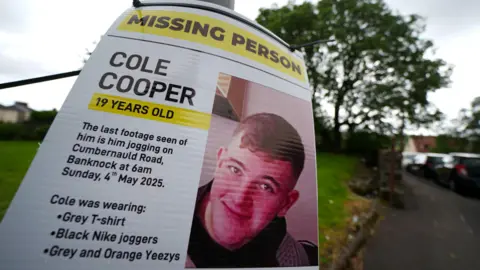
As young adult Cole Cooper walked out into a crisp May night earlier this year, nobody would have considered he was in the concluding period of his life.
He had been socializing with companions at a bar near his residence in Scotland's central area.
But a few hours after, his phone was off - zero communications, no online updates.
When there was zero indication of him five days later, his family called police.

Warning: This article contains emotional content and mentions of suicide
The Cooper family explained that they informed authorities from the beginning that Cole's disappearance wasn't usual activity - and that he had been struggling with his psychological state.
"We explained to the police about Cole's psychological condition. While Cole had not been confirmed to have depression or comparable problems, he did struggle," said his mother.
"And they nevertheless did not designate Cole as a critical risk.
"He's at no time fled... authorities have never been engaged in my son's life until the period he vanished."

The authorities originally deemed Cole to be moderate risk after performing an evaluation and talking to loved ones and acquaintances.
They said Cole often shifted between residences and that it was not uncommon for him to be uncontactable with his relatives for certain durations.
Cole's loved ones believed they had few alternatives but to take matters into their own hands and make their own search request.
His relative, Aimee, said: "We just decided we're going to do it ourselves when they're not paying attention to us."
They took to online platforms, writing one simple message: "Has anyone spotted Cole?"
"The minute that it went on there, it started to somewhat spiral," his aunt said.
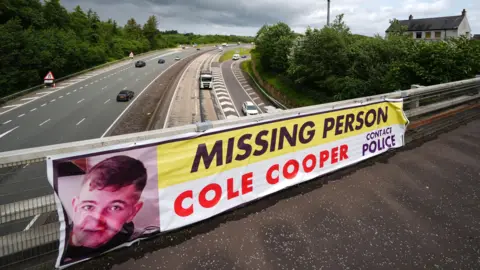
Cole's case began circulating across the area and elsewhere. His face was on multiple online clips, social media stories and social media posts.
The household established a specialist page, and sightings and information were distributed digitally between thousands of people.
The relative said they obtained many contacts from individuals who thought they had encountered Cole.
The loved ones coordinated search teams, which involved up to 300 people at times in the later stages of their quest.
The vanishing had surprised the local population in the area, the former mining village on the banks of the channel near to where Cole resided. Community members scoured the area as they assisted with the search.
The family also began to conduct their own door-to-door inquiries, requesting inhabitants to review their surveillance systems.

"It's quite unfortunate that it arrived at a point where we were having to resort to that," the relative said.
"Rather than you focusing on your sorrow and your hopelessness and your anxiety for that individual, you're now in a alternative position."
Police Scotland says the family had stated a wish to carry out their own hunts and appeals, which they were allowed to do.
"We guided them on this. Nonetheless, at no time did the authorities solicit or prompt the relatives to direct the investigation or give updates," a official said.
The authorities had also been looking for Cole.
A week after he was reported missing, they released their initial public request - then they increased his risk rating from medium to high.
Victim recovery canine units and drones were brought in, as well as the aerial unit and divers.
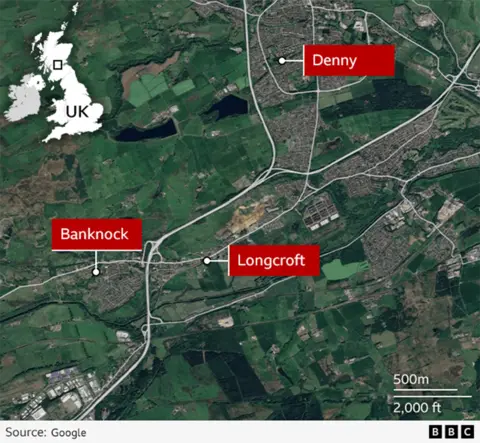
The relatives pieced together the final moments of Cole's life and created a sequence of where the young man had gone, looking for indicators.
They located footage of him from just after he left the pub in the location, in Stirlingshire, on the specific night.
He was recorded on video proceeding to a social gathering, then afterward a doorbell camera picked him up moving between his father's residence, while he wasn't present.
The household got CCTV footage from a vehicle service center which recorded Cole as he proceeded down the central avenue at the location, pausing near a public transport point.
At 06:00,


